Blackberry
Blackberry
Rubus fruticosus
📋Quick Facts
Height
2.5m
Spread
3.0m
Water
💧💧 Average watering
About
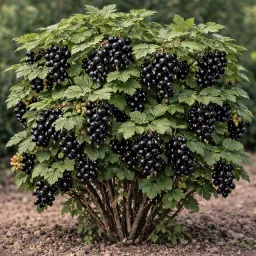
Plant blackberry canes bare-root from November to March, against a wall, fence, or sturdy post-and-wire system — modern cultivated varieties crop far more heavily than wild brambles and most are thornless. Blackberries are very hardy (RHS H6–H7), shrug off any UK winter, and one or two plants will give a household more fruit than they can eat from August to October. Train this year's canes (the floricanes) to one side and next year's growth (the primocanes) to the other so you can identify what to cut out after fruiting — that single rule prevents the bramble chaos most gardens fall into. Loch Ness, Loch Tay, and Triple Crown are the reliable thornless UK varieties; Bedford Giant is the heaviest cropper if you can tolerate thorns. Pick when berries are fully matt-black, never glossy.
How to grow blackberry
- 1
Choose thornless or thorny
Thornless modern varieties are most UK gardeners' choice — easier to prune and pick, slightly less heavy-cropping than thorny equivalents. Loch Ness (the UK standard, semi-upright, fully thornless, late August–September). Loch Tay (earlier than Loch Ness, more compact). Triple Crown (huge berries, vigorous, late). Thorny varieties crop slightly heavier and often have better flavour: Bedford Giant (the heritage cropper), Ashton Cross (the wild bramble taste, refined). For one bush in a small garden, Loch Ness is the safe pick.
- 2
Build a training framework
Blackberries crop on two-year-old canes, so they need somewhere to go. Post-and-wire: three horizontal wires (60 cm, 90 cm, 120 cm) between sturdy posts, 3–4 m apart. Against a wall or fence: vine eyes and wire at the same heights. Tie the canes horizontally and at an angle as they grow — this is what separates a productive blackberry from a sprawling thicket.
- 3
Plant bare-root in winter
November to March, while dormant. Set the rootball 5–7 cm below ground level. Cut the cane back to 25 cm at planting to encourage new growth from the base. Space 2.5–3 m apart for vigorous varieties; 2 m for compact ones like Loch Tay. They tolerate part shade — useful for a north or east wall.
- 4
Understand floricanes vs primocanes
The whole pruning system rests on this. Floricanes: last year's canes, which fruit this summer and then die. Primocanes: this year's new growth from the base, which will fruit next summer. A blackberry has both at once — old fruiting canes on one side of the wire system, new green canes on the other.
- 5
Train new canes to the unused side
As new canes (primocanes) emerge from the base from May onwards, train them to one side of the framework — tie them horizontally along the lower wires. The fruiting canes (floricanes) from last year occupy the other side. Keep them separate; the moment they tangle, the pruning advantage is lost.
- 6
Net against birds and squirrels from July
Blackbirds love blackberries. Net as the first berries colour from red to black in July. Squirrels will work harder than birds to defeat a net — tuck the mesh under and around posts. A walk-in fruit cage is the long-term answer if you have multiple soft fruit.
- 7
Pick when berries are matt-black
A truly ripe blackberry is matt-black with a slight bloom, never glossy. Glossy black means it's not fully ripe — the sugars haven't developed yet. The berry should pull off the white core with the lightest touch; if you tug, leave it another day or two. Pick over the plant every 2–3 days from late July through to early October.
- 8
Cut out fruited canes after harvest
Late September–October. Cut every floricane (the wood that just fruited) right down to the base. This is the entire pruning of a blackberry — drastic but mechanical. The new primocanes from this season then take over the framework for next year's crop. Tie them in tidily, shorten any whippy ends to 1.8 m. Done for the year.
Common questions
The blackberry year in your garden
How to Propagate
Hardiness Zones
USDA 5 equivalent