Catmint (Nepeta)
Catmint (Nepeta)
Nepeta × faassenii
📋Quick Facts
Height
0.5m
Water
💧 Minimal watering
Hardiness
Zone 3-8
About
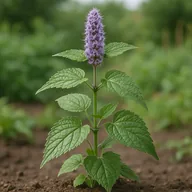
Plant catmint in spring, in full sun in well-drained soil — it's an easy hardy perennial that forms loose mounds of grey-green aromatic foliage topped by spires of lavender-blue flowers from May through September. Catmint is hardy (RHS H5–H7) and one of the most reliable UK garden plants for pollinators — bees of all kinds work the flowers obsessively. Six Hills Giant is the workhorse cultivar (90 cm tall, vigorous), Walker's Low is the mid-sized one (50 cm), and N. racemosa Walker's Low is more compact still. Cut the whole plant back hard after the first flush in late June (the Chelsea Chop) for a longer second flush August–September. Cats do roll in it — catnip (Nepeta cataria) is the species that drives cats wild; ornamental catmint affects them too but less dramatically. A bee plant first, a cat plant second.
How to grow catmint (nepeta)
- 1
Pick ornamental or true catnip
Ornamental catmints (the garden classics — Nepeta × faassenii, N. racemosa, N. nervosa, N. govaniana): lavender-blue flowers, grey-green foliage, the showy border plants. Cats are mildly attracted but rarely destructive. Six Hills Giant: vigorous 90 cm tall, the UK workhorse. Walker's Low (despite the name, 50–60 cm): mid-sized, RHS Award of Garden Merit, the most popular UK garden choice. True catnip (Nepeta cataria): the species cats really respond to — used in herbal teas, grown more for cats than for ornament. Smaller white-pink flowers, weedier appearance. See separate catnip content if drafted.
- 2
Plant in full sun and well-drained soil
Mediterranean origins: catmint wants 6+ hours direct sun and free-draining soil. Rich soil = flopping plants. On clay soils, fork in horticultural grit at planting. Tolerates poor sandy or chalky soils perfectly. Spacing 50 cm for medium varieties, 75 cm for Six Hills Giant.
- 3
Plant in spring, after last frost
April to May. Container-grown plants are sold in 1–2 L pots from spring onwards. Plant at the same depth as the pot. Water in deeply, then leave alone — catmint hates overwatering once established. Spring planting gives time to root before its first winter.
- 4
Don't feed
Feeding makes catmint flop. Rich soil produces lush growth that collapses sideways and reduces flowering. No fertiliser at planting; no fertiliser during the season. A gravel mulch around the base keeps weeds down without adding nutrients. Stress and poor soil concentrate the essential oils and improve both flowering and bee-attractiveness.
- 5
Apply the Chelsea Chop in late June
The single most important husbandry technique. After the first flush of flowers fades (late June), cut the whole plant down to 10 cm above ground. Looks brutal but works: catmint regrows quickly and produces a second, longer flush of flowers from August through September. Without the Chelsea Chop, catmint flowers in May–June and then looks tatty for the rest of summer. With it: 4 months of flowering and tidy foliage.
- 6
Stake taller varieties or let them flop naturally
Six Hills Giant (90 cm) often flops sideways onto the ground in summer storms — a discreet grow-through plant support placed early lets it grow naturally. Many UK gardeners actually like the flopping habit at the front of a border (it softens path edges) and don't bother staking. Compact varieties (Walker's Low, Junior Walker) stay upright without support.
- 7
Cut to 10 cm in late autumn
After the second flush fades in September, cut the plant down to 10 cm above ground. Removes the spent stems and prepares the clump for winter dormancy. The plant returns each spring from the rootstock. Don't divide in autumn — wait for spring.
- 8
Divide every 3–4 years in spring
Catmint clumps gradually become congested and the centre dies out. In early spring (just as new growth emerges), lift the clump, split with a spade into 3–4 sections, replant the best outer pieces in fresh soil. Compost the dead centre. Free new plants — give the spares away. Easy and reliable propagation.
Common questions
Pest Resilience
Aromatic oils strongly deter pests; virtually pest-free.
The catmint (nepeta) year in your garden
How to Propagate
Hardiness Zones
USDA 6–7 equivalent