Dill
Dill
Anethum graveolens
📋Quick Facts
Height
0.6-0.9m
Spread
0.3-0.4m
Water
💧💧 Average watering
Hardiness
Zone 2-11
About
Sow dill direct from April to July, every 3 weeks, in sunny well-drained soil — it's a hardy annual that bolts to seed quickly in heat so successional sowing is the only way to keep fresh foliage going through summer. Dill is moderately hardy (RHS H3–H4) and tolerates spring frosts but not hard winter cold. Don't transplant dill — it has a long taproot and resents being moved; sow direct where you want it to grow, or use deep modular cells. Pick young feathery foliage for fish dishes, soft cheese, and dressings; let later sowings flower and set seed for pickling (dill seed has a stronger, more aniseed flavour than the leaf). Dill is a magnet for hoverflies and parasitic wasps — invaluable in any veg garden. Don't plant near fennel: they cross-pollinate and produce muddy-flavoured hybrids.
How to grow dill
- 1
Sow direct, not in modules
Dill has a long, fragile taproot and resents transplanting. Either sow seed direct where you want it to grow, or use deep modular cells (10+ cm deep — root-trainer cells work well) and plant out before the roots circle the bottom. Standard module trays don't give enough depth.
- 2
First sowing in April, then successional
Sow the first seeds in mid-April (mid-March in mild southern gardens, early May in cold areas). Then sow a new short row every 3 weeks until late July. This is the only way to keep tender foliage coming — each individual plant bolts to flower within 6–8 weeks of sowing in warm weather.
- 3
Sun and well-drained soil
Full sun, ordinary garden soil. Heavy or wet soils encourage damping off and root rot. On clay, sow into a raised bed or large container of multipurpose compost. Don't enrich the soil — dill flowers and bolts faster on rich ground.
- 4
Sow shallow and thin
Surface sow or barely cover seed (1 cm max). Germination in 7–14 days at 15–20°C. Thin seedlings to 20 cm apart when they have 2–3 true leaves. Crowded plants bolt sooner and produce thinner foliage.
- 5
Pick young foliage from 6 weeks
Cut whole stems just above a side-shoot rather than picking individual leaves. The plant branches and re-grows for several cuts. Once flower buds form, leaf production stops and flavour weakens — let those plants run to seed for pickling, and rely on younger successional sowings for fresh foliage.
- 6
Let some plants flower for hoverflies
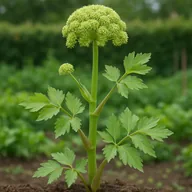
The yellow umbel flowers in July–August are extraordinary for hoverflies and parasitic wasps — both major aphid predators. Letting a few plants flower per dill patch turns it into a biological pest-control hub. Most gardeners let the late-summer plants flower (since they're going to seed anyway).
- 7
Harvest seed for pickling
Dill seed has a stronger, more aniseed flavour than the leaf — essential for dill pickles, gravlax, rye bread. Cut flower heads as the seeds turn brown but before they shatter (early September). Hang upside-down inside a paper bag for 1–2 weeks; seeds drop into the bag as they dry. Store in a sealed jar.
- 8
Don't plant near fennel
Dill and fennel cross-pollinate (both in the carrot family) and produce hybrid plants with muddy flavour. Keep them at opposite ends of the garden, or pick one or the other. Dill also doesn't mix well with carrots (same family, attracts the same pests).
Common questions
Pest Resilience
Aphids occasionally cluster on flower heads but rarely cause harm.
Visual Characteristics
Fruits
Harvest: Summer
Culinary
Gravlax, pickles, potato salad, tzatziki, fish sauces, cucumber salad
The dill year in your garden
How to Propagate
This plant produces viable seeds for propagation
Hardiness Zones
USDA 7–8 equivalent