Lemon balm
Lemon balm
Melissa officinalis
About
Plant lemon balm from a young plant in spring, in sun or part shade, in any ordinary garden soil — it's an easy, vigorous, lemon-scented perennial that thrives almost anywhere and dies back to ground each winter. Lemon balm is hardy (RHS H5–H6) and reliably returns each spring. Treat it like mint — contain it. Lemon balm spreads by both runners and self-seeding, and an unchecked plant takes over a herb bed within 3 years. Sink barriers around it or grow in a pot. Pick fresh leaves for herbal tea (the classic use — calming, lemony, lovely with honey), salads, dressings, and fish dishes. Cut the whole plant back to 5 cm in mid-summer for a fresh flush of tender new growth. The yellow-leaved Aurea cultivar is more ornamental and slightly less vigorous than the species.
How to grow lemon balm
- 1
Buy a young plant in spring
Lemon balm grows easily from seed but a single plant gives a household more than enough lemon balm — and seed-grown plants are slower than divisions or pot-grown specimens. Buy a 9 cm or 1 L plant in April–May.
- 2
Contain it, like mint
Lemon balm is in the same family as mint (Lamiaceae) and shares mint's invasive tendencies. Two containment strategies. (1) Grow in a pot — 30 cm minimum, stood on a paving slab so runners can't escape into surrounding soil. (2) Sink a barrier in the ground — 30 cm of paving slab or pond liner around the planting area. Without containment, lemon balm spreads aggressively by runners and self-sown seedlings, and is hard to remove once established.
- 3
Plant in sun or part shade
Adaptable. Full sun for strongest lemon scent; light shade for tender leaves and better growth in dry summer. Ordinary soil — no need to enrich. Spacing 60 cm if planting more than one (it grows fast).
- 4
Pick fresh from spring through autumn
Cut whole stems or pinch individual leaves any time from April onwards. The plant branches and re-grows. Strongest lemon flavour and scent is in early summer just before flowering; midsummer growth gets coarser and less aromatic. Pick over the plant continuously to keep it producing tender shoots.
- 5
Cut back hard in mid-summer
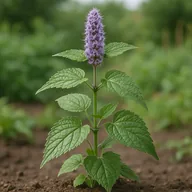
The single most important husbandry. In late June or early July, cut the whole plant down to 5 cm above ground. This (1) removes the white flower spikes before they set seed, (2) prevents the leggy mid-summer slump when older growth gets tatty and aphid-prone, (3) triggers a fresh flush of tender new leaves for late summer. Without this cut, lemon balm gets ragged from July onwards.
- 6
Cut all flower stems before they set seed
Lemon balm self-seeds prolifically — a single un-deadheaded plant produces hundreds of seedlings the following year, often colonising paths and gravel. Cut flower stems off as buds form (mid-June) for total control, or right after flowering (late July) before seed develops.
- 7
Make lemon balm tea
The classic use. Pick a handful of fresh leaves (or 1 tbsp dried), pour over boiling water, steep 5 minutes, strain. A traditional UK calmer for nervous tension and disturbed sleep — herbalists have used it for centuries. Fresh leaves give a bright lemon flavour; dried leaves are subtler but easier to keep through winter. Honey complements lovely.
- 8
Divide every 3–4 years
Lemon balm clumps get woody and bare at the centre after 3–4 years. Lift in early spring, split with a spade into 4–6 sections, replant the best outer pieces in fresh soil. Compost the dead centre. The plant comes back rejuvenated, with the bonus of spare plants for friends.
Common questions
Pest Resilience
Intensely aromatic; virtually pest-free and spreads vigorously.
Visual Characteristics
Culinary
Herbal tea, cocktails, fruit salads, ice cream, lemon desserts, cordials
The lemon balm year in your garden
How to Propagate
Hardiness Zones
USDA 6–7 equivalent