Lovage
Lovage
Levisticum officinale
📋Quick Facts
Height
1.5-2.0m
Spread
0.6-0.9m
Water
💧💧 Average watering
Hardiness
Zone 4-8
About
Plant lovage from a young plant in spring, or sow seed direct in late summer, in sun or part shade in any decent garden soil — it's a very hardy perennial that grows large (2 m tall when flowering) and gives strong celery-and-parsley flavour to soups, stocks, and salads. Lovage is very hardy (RHS H7) and the leaves are one of the first usable greens of the year, appearing in March. One plant is enough for a household — lovage is too big and too strongly flavoured to want more. Cut foliage hard back in mid-summer for a fresh flush of tender leaves; the older summer foliage gets coarse and intensely strong. An old-fashioned UK herb less grown today, but unbeatable for stocks and stews. Self-seeds modestly but doesn't take over.
How to grow lovage
- 1
Plan for a big plant
Lovage grows BIG. A mature lovage reaches 1.5–2 m tall when flowering, with a 1 m wide clump of foliage at the base. Allow at least 1 m² of space; don't plant near small or delicate neighbours. Position: back of a border, the back of the herb garden, a wild corner near the kitchen door, an unused 1 m² of allotment.
- 2
Plant a young plant or sow seed
From plant (easier): a 1–3 L pot from a herb nursery (Jekka's Herb Farm, Pepperpot, RHS Wisley shop) in March–May. One plant is enough. From seed (cheaper, slower): sow direct in late summer (August–September) when the seed is fresh — lovage seed loses viability quickly. Surface-sow, press gently, germinates in 14–28 days. Seed-grown plants take a year longer to reach full productivity.
- 3
Plant in sun or part shade, moisture-retentive soil
Lovage prefers deep, moisture-retentive, fertile soil but tolerates anything from light shade to full sun and most soil types except waterlogged. Mulch annually with garden compost or well-rotted manure to feed the deep taproot. Spacing isn't an issue for one plant; if planting multiple (most people don't), space 1 m apart.
- 4
Don't transplant once established
Lovage has a long deep taproot that resents disturbance. Plant young and leave it where it is — mature lovage is hard to move successfully. For dividing: lovage can be divided in early spring by carefully splitting the crown with a sharp spade, but the operation often sets the plant back for a year.
- 5
Pick young leaves from March
Lovage is one of the first usable greens of the year — leaves appear from early March and are tender, flavour-packed, ready for use immediately. Pick the youngest tender leaves through spring and early summer; midsummer foliage gets coarse and intensely flavoured (so strong it dominates dishes — use sparingly).
- 6
Cut foliage back hard in mid-summer
The key husbandry rule. Cut the whole plant down to 15 cm above ground in mid-July (after flowering or as flower stems form). This (1) removes the coarse summer foliage, (2) triggers a fresh flush of tender young leaves for late summer and autumn cropping, (3) keeps the clump tidy. Without the mid-summer chop, lovage looks tatty from August onwards and the leaves are too strong to use.
- 7
Cut flower stems off for leaves OR let it flower
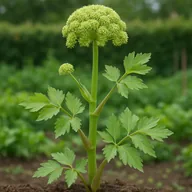
Lovage produces tall yellow umbel flowers in June–July on stems up to 2 m. Cut flower stems off as buds form if you want to focus the plant on leaf production (the leaves are the kitchen prize). Leave flowers if you want the architectural drama (impressive specimen plant), the bees and beneficial insects that work the umbels, or the seed (lovage seed has its own celery-like flavour for use in pickles and breads).
- 8
Harvest seed in late summer
The yellow umbel flowers develop into seed heads through August. Cut whole umbels as the seeds turn brown but before they shatter, hang upside-down inside a paper bag for 2 weeks. Lovage seed has a stronger flavour than the leaves — used in pickled vegetables, rye bread, spice mixes. One plant produces 100+ g of seed in a good year.
Common questions
Pest Resilience
Few pest issues; celery leaf miner occasionally but rarely serious.
Visual Characteristics
Fruits
Harvest: Spring to autumn / fall
Culinary
Soups, stews, stocks, potato dishes, Bloody Mary, celery substitute
The lovage year in your garden
How to Propagate
This plant produces viable seeds for propagation
Hardiness Zones
USDA 4–5 equivalent