Pulmonaria / lungwort
Pulmonaria / lungwort
Pulmonaria officinalis
📋Quick Facts
Height
0.2m
Water
💧💧 Average watering
Hardiness
Zone 3-8
About
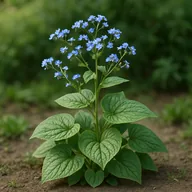
Plant pulmonaria in autumn or spring, in part to full shade in moisture-retentive soil — they're hardy perennials grown for the distinctive silver-spotted oval leaves and small bell-shaped flowers that open pink and age to blue (sometimes both colours on the same stem). Pulmonaria is hardy (RHS H6–H7) and one of the earliest flowering UK perennials, blooming from late February through April when little else is yet awake. The flowers are an important early nectar source for emerging queen bumblebees. Cut the whole plant down to 5 cm after flowering for a fresh flush of clean foliage — old summer leaves get mildewed and tatty. Sissinghurst White (pure white flowers, heavily silver-spotted leaves) is the UK garden classic. Spreads gently by underground rhizomes; divide every 3–4 years.
How to grow pulmonaria / lungwort
- 1
Pick a pulmonaria for flowers or foliage
Sissinghurst White: pure white flowers, heavily silver-spotted leaves — the white-garden classic. Blue Ensign: deep blue flowers without pink phase, plain green leaves — striking flower contrast. Diana Clare: blue-violet flowers, almost entirely silver leaves — foliage star. Trevi Fountain: cobalt blue flowers, silver-spotted leaves — vigorous, mildew-resistant. Opal: pale pink-fading-to-blue flowers, silver-marked leaves — classic cottage-garden form. For a first pulmonaria: Sissinghurst White or Trevi Fountain — both reliable, mildew-resistant.
- 2
Plant in part to full shade
Pulmonarias are woodland-edge plants. Position under deciduous trees, in north-facing borders, alongside shaded paths. Full sun is bad — leaves scorch, plants sulk, mildew is much more common. Moisture-retentive soil is essential — drought-stressed pulmonaria leaves go crispy and brown.
- 3
Plant in autumn or spring
Best time: autumn (September–October) for establishing roots before winter, OR spring (March–April) for fast growth into the flowering season. Container-grown plants widely sold by garden centres and herbaceous-perennial nurseries. Spacing: 40 cm apart — pulmonaria fills out into 50 cm ground-covering mats within 2 years.
- 4
Mulch annually with leaf-mould
Pulmonaria thrives on leaf-mould or garden compost worked into the soil at planting and applied as an annual mulch. In autumn or spring, apply 3–5 cm around (not on) the crowns. Don't feed with high-nitrogen fertiliser — encourages soft growth that mildews more readily. Steady organic feeding from leaf-mould is the right approach.
- 5
Watch the flower colour change
The classic pulmonaria magic: many varieties have flowers that open pink and age to blue as the petals mature, with both colours often visible on the same flower stem. This is a normal pH-driven colour change in the petal anthocyanins. Not all varieties show the colour shift: Sissinghurst White stays white, Blue Ensign stays blue. Bee preference: bees visit younger pink flowers (when they have nectar) and ignore the older blue ones (which have been drained).
- 6
Cut whole plant down after flowering
The single most important husbandry rule. When flowers finish in late April or early May, cut the whole plant down to 5 cm above the ground. Three reasons: (1) tidies the spent flowers; (2) triggers a fresh flush of clean spotted foliage for summer display; (3) removes the older leaves that will inevitably develop powdery mildew through summer. Water deeply after the chop to support regrowth.
- 7
Watch for powdery mildew
Pulmonaria's main UK disease. White powdery patches on leaves, often appearing late summer when conditions are dry. Prevention: (1) cut the whole plant down after flowering — fresh regrowth resists mildew better than the original spring leaves; (2) water deeply in dry spells (drought stress increases mildew); (3) choose mildew-resistant cultivars (Trevi Fountain, Raspberry Splash, Excalibur); (4) avoid overhead watering (water at the base). Mildewed plants can be cut down again in late summer for a third flush.
- 8
Divide every 3–4 years
Pulmonaria clumps spread gently by underground rhizomes and gradually become congested. Every 3–4 years, in early autumn or early spring, lift the clump, split with a sharp spade into 3–6 sections, replant the best outer pieces in fresh leaf-mould-enriched soil. Compost the dead congested centre. Free new plants for filling gaps or sharing.
Common questions
Pest Resilience
Few pest problems; slugs may eat young leaves in wet conditions.
The pulmonaria / lungwort year in your garden
How to Propagate
Hardiness Zones
USDA 5 equivalent