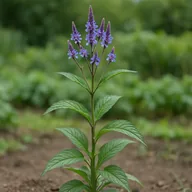
Salad burnet
Salad burnet
Sanguisorba minor
📋Quick Facts
Height
0.4m
Spread
0.3m
Water
💧 Minimal watering
About
Plant salad burnet from a young plant in spring or autumn, or sow seed direct in March–April, in sun or part shade in well-drained soil — it's a hardy UK native perennial that gives a delicate cucumber-flavoured leaf for salads, herb butters, and cool summer drinks. Salad burnet is very hardy (RHS H6–H7) and evergreen — the rosette of small toothed leaflets stays usable through mild winters, providing fresh greens when little else is. Pick the young inner leaves continuously; older outer leaves get tough. Cut flower stems off as buds form to keep leaf production going and prevent self-seeding (though salad burnet seeds itself modestly). Tolerates the chalk and dry conditions that defeat many herbs — found wild on UK chalk grassland. An old-fashioned UK herb less grown today but unmatched for cucumber-fresh winter salads.
How to grow salad burnet
- 1
Buy a plant or sow direct
From plant (faster): a 9 cm or 1 L plant from a herb nursery (Jekka's, Pepperpot, RHS Wisley) in March–May. One plant is enough; divides easily once established. From seed (cheaper, slower): direct-sow in March–April or August–September; germinates in 14–21 days. Seed-grown plants reach productive size in year 2.
- 2
Plant in sun or part shade
Salad burnet is happy in full sun or part shade. Well-drained soil is essential — tolerates dry, chalky, sandy conditions perfectly (the wild plant grows on UK chalk grassland). Doesn't like waterlogged ground. Spacing 30 cm. Ideal positions: front of border, herb bed edge, gravel garden, dry chalky slope, rockery.
- 3
Pick young inner leaves continuously
Cut young leaves with scissors at the base, starting from the inside of the rosette where the youngest growth is. The flavour is in the young tender leaves — older outer leaves get tough and slightly bitter. Pick continuously to keep the plant producing new growth. Crush a leaf between your fingers before tasting; the cucumber scent confirms you have salad burnet (rather than its giant relative Sanguisorba officinalis, the great burnet, which has medicinal but not culinary use).
- 4
Cut flower stems off as buds form
The key husbandry technique. Salad burnet produces small round pinkish-red flower-heads on stems 60–80 cm tall from June onwards. Cut flower stems off as buds form — this keeps leaf production going (otherwise leaves get coarser) and limits self-seeding. Leave a few stems if you want the architectural button-flowers (visually distinctive) or some self-seeding for replacement plants.
- 5
Use fresh for cucumber-cool summer drinks
The classic UK use: a few leaves in a glass of Pimm's or a jug of cucumber-water alongside mint. The cool cucumber flavour is at its best on a hot day. Salad use: sparingly in green salads, particularly with cool ingredients (cucumber, lettuce, soft cheeses). Herb butter: chopped salad burnet leaves blended into softened butter. Vinegar: steep fresh leaves in white wine vinegar for a week for a delicate herb vinegar.
- 6
Pick through winter (one of the few evergreens)
Salad burnet is evergreen in mild UK gardens — the rosette stays green and usable through normal winters, giving fresh leaves when most other herbs are dormant. Pick lightly in winter (don't strip a plant), let it rebuild in spring. In hard winter weather, cover with horticultural fleece to keep the leaves usable.
- 7
Divide every 4–5 years in spring
Salad burnet clumps gradually become congested. In early spring (March), lift the clump, split with a sharp spade into 3–4 sections, replant the best outer pieces in fresh soil. Compost the dead centre. Free replacement plants and a rejuvenated original. Most UK gardens never need more than 2–3 plants total.
- 8
Don't confuse with great burnet
Salad burnet (Sanguisorba minor) is the culinary herb on this page — small toothed leaflets, 30–60 cm rosette, cucumber flavour. Great burnet (Sanguisorba officinalis) is a different species — taller (1 m), larger leaves, deeper red bottle-brush flowers, medicinal but not culinary use. Buy by Latin name to be sure, or check leaf size and flower colour. Most herb nurseries label correctly.
Common questions
The salad burnet year in your garden
How to Propagate
Hardiness Zones
USDA 5 equivalent