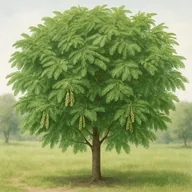
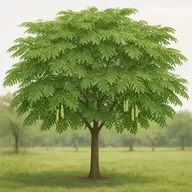
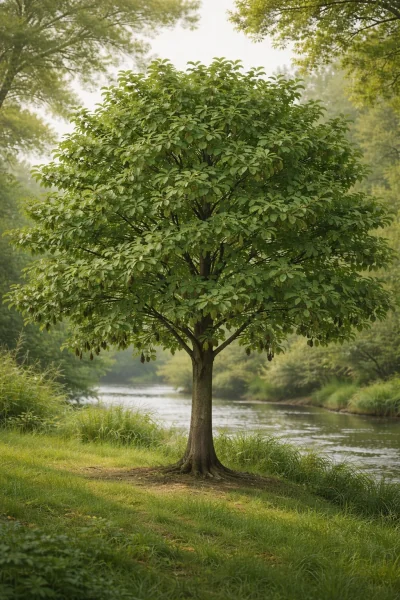
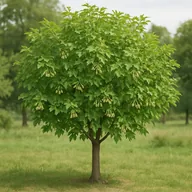
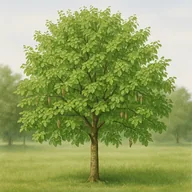
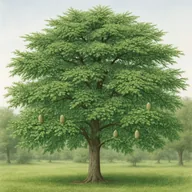
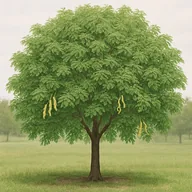
Sweet chestnut
Sweet chestnut
Castanea sativa
📋Quick Facts
Height
20.0-30.0m
Spread
15.0-25.0m
Cropping Timeline
Sweet chestnuts demand patience. Grafted varieties like Marigoule or Maraval can start producing a few nuts within five to seven years, but seed-grown trees may take fifteen years or more and the nut quality is unpredictable. You need two genetically different trees for cross-pollination. In cooler climates, late spring frosts and cool summers can prevent nuts from filling properly — choose early-ripening cultivars for the best chance. The nuts are delicious roasted, pureed, or in stuffing, and a mature tree in full production can yield an extraordinary quantity. Think of it as planting for the future.
About
Plant sweet chestnut bare-root from November to March, in well-drained acid to neutral soil — only if you have space, because mature trees reach 20–30 m and live 500+ years. Sweet chestnut is hardy (RHS H6) and well-naturalised in the UK (Roman introduction rather than true native), thriving on sandy or loamy soils but failing on chalk and shallow soils. Plant two different varieties for cross-pollination — sweet chestnut is mostly self-incompatible, and the wind-pollinated catkin pollen needs a different cultivar within range. The edible nuts ripen in October, encased in fiercely spiny green burrs that split open to reveal 2–3 glossy mahogany-brown nuts. Don't confuse with horse chestnut (Aesculus hippocastanum, the conker tree) — horse chestnut nuts are not edible. Roast over an open fire in late autumn, or stuff into the Christmas turkey.
How to grow sweet chestnut
- 1
Don't confuse with horse chestnut
Critical to get right. Sweet chestnut (Castanea sativa) is the edible nut tree — long narrow leaves with sharp serrated edges, catkins in summer, spiny green burrs containing glossy brown edible nuts. Horse chestnut (Aesculus hippocastanum, the conker tree) is NOT edible — palmate leaves (5–7 fingers spreading from one point), conical pink-white flower candles, spiny green husks containing glossy brown conkers. Conkers cause stomach upset if eaten. The leaf shape is the easiest distinguishing test — long single leaves = sweet chestnut; palmate clustered fingers = horse chestnut.
- 2
Check you have the right soil
Sweet chestnut wants acid to neutral, well-drained, deep soil — sandy or loamy, typical of UK lowland woods. It fails on chalk, alkaline soils, shallow soils over chalk, and waterlogged ground. Test pH (£5 kit) before planting. If your soil is alkaline or shallow, plant walnut instead — easier on UK chalk soils, similar nut crop.
- 3
Plant at least two varieties for cross-pollination
Sweet chestnut is mostly self-incompatible — own pollen doesn't fertilise own flowers. Plant 2 different varieties within 50 m for proper cross-pollination. Marigoule and Marsol are the modern UK pairing — heavy cropping, large nuts, good flavour. Bouche de Bétizac is the heaviest cropper. Maraval is a reliable pollinator. For a single specimen with no nut crop, the species form (Castanea sativa unselected) gives a magnificent tree with smaller nuts that's still ornamentally valuable.
- 4
Plant bare-root in winter, allow real space
November to March while dormant. Sweet chestnut establishes faster from bare-root than container plants. Spacing: 12–15 m apart for nut-cropping orchards; 20 m for free-standing specimens; don't plant within 10 m of a building or path. A mature sweet chestnut reaches 20–30 m tall and 15–20 m crown spread — this is a tree for parks, large gardens, and orchards, not small suburban plots.
- 5
Be patient — first crop in 5–10 years
Sweet chestnut from a grafted variety crops from year 5–7 onwards. Seedling trees (cheaper but unselected) take 10–15+ years to first crop and may produce smaller nuts. Be patient — once established, sweet chestnuts crop reliably and heavily for 100+ years from a single tree.
- 6
Watch the catkins in midsummer
Sweet chestnut flowers in late June–July — the catkins are visible as long yellowish-cream pendulous strings. Hot calm conditions during catkin-shedding give the best pollination; cool wet weather can reduce the nut crop substantially. Nothing you can do about the weather, but if a poor flowering year happens, expect a smaller crop in October.
- 7
Pick burrs from October, wear gloves
The spiny green burrs ripen in October, splitting open on or around the tree to reveal 2–3 glossy mahogany-brown nuts inside. Wear thick leather gloves — the spines are vicious. Pick from the ground (where they fall when ripe) rather than from the tree (most are out of reach anyway). Or shake branches gently. The nuts are best eaten fresh; they can be stored 2–3 weeks at room temperature, longer in the fridge.
- 8
Roast or boil before eating
Sweet chestnut nuts must be cooked — they're starchy and inedible raw. Roasting (the classic): cut a cross in the flat side of each nut with a sharp knife, roast at 200°C for 20–25 minutes, or on a chestnut roasting pan over an open fire for 15–20 minutes. The shells split, peel them off (warm — they're easier hot), eat the soft sweet kernels. Boiling: simmer 25–30 minutes; useful for stuffing and savoury dishes. Marrons glacés: candied chestnuts, a French Christmas treat — labour-intensive but exquisite.
Common questions
Pest Resilience
Chestnut blight is devastating where present; ink disease and weevils also a concern.
Visual Characteristics
Culinary
Roasting, flour (castagnaccio), stuffing, purees, candied (marrons glaces), soups
The sweet chestnut year in your garden
How to Propagate
Hardiness Zones
USDA 5–6 equivalent