Whitecurrant
Whitecurrant
Ribes rubrum
📋Quick Facts
Height
1.3m
Spread
1.3m
Water
💧💧 Average watering
About
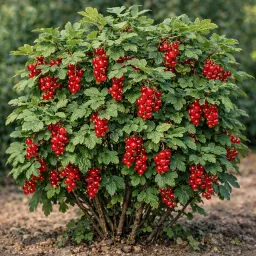
Plant whitecurrant bushes bare-root from November to March, in sun or light shade, in any decent garden soil — they are the white-fruiting cultivar form of the same species (Ribes rubrum) as redcurrant, grown identically. Whitecurrants are very hardy (RHS H6–H7) and shrug off any UK winter. Prune like a gooseberry, not a blackcurrant — they fruit on spurs on a permanent framework. The berries are translucent golden-white when ripe, noticeably sweeter and lower in acid than redcurrants, less attractive to birds (which is the practical advantage over reds in unnetted gardens). Eat fresh, add to summer pudding for a paler version, or make a delicate amber jelly. White Versailles, White Pearl, and Blanka are the reliable UK varieties.
How to grow whitecurrant
- 1
Treat whitecurrants exactly like redcurrants
Whitecurrants are Ribes rubrum — the same species as redcurrant, selected for the absence of red pigment in the berry. Every aspect of cultivation is identical to redcurrant: planting, pruning, feeding, picking. The only practical differences are flavour (sweeter, less acid), appearance (translucent gold-white), and bird damage (slightly less because birds spot red faster than white).
- 2
Choose your variety
White Versailles — the traditional UK variety, early-to-mid, reliable, long strigs of pale gold berries. White Pearl — modern, very pale (almost white), good cropper, decent disease resistance. Blanka — Czech variety, late, the heaviest cropper, very long strigs, the modern standard if you can find it. White Grape — small bush, useful for containers. A single bush crops well; no pollination partner needed.
- 3
Plant bare-root in winter
November to March, while dormant. Plant on a slight mound to keep the crown out of waterlogging. Spacing: 1.5 m for bushes; 30–45 cm for cordons; 1 m for fan-trained. Whitecurrants take light shade as happily as redcurrants — fan-train against a north or east wall if running out of sunny spots.
- 4
Train to a permanent goblet
Year one: cut the main shoots back by half to outward-facing buds, removing inward growth. Aim for 5–6 main branches angled outward from a 15 cm clear stem. Year two onwards: extend the framework, keep the centre open.
- 5
Summer prune in late June
Cut all new sideshoots back to five leaves in late June. Exposes the strigs to sunlight, keeps the bush manageable, encourages spurs along the framework branches. Same timing as redcurrant and gooseberry.
- 6
Winter prune for renewal
February. Shorten leading shoots of each main branch by half. Cut back the sideshoots already shortened in summer to two buds. Remove any wood older than 4–5 years at the base. The permanent framework largely stays; the spur system gets refreshed.
- 7
Net (lightly) against birds
The big practical advantage of whitecurrants over reds: birds find pale fruit harder to spot, so a light netting often suffices where reds need a full fruit cage. Still net once the berries start to colour — squirrels and starlings will find them given time. Fine mesh, tucked under at the base.
- 8
Pick whole strigs
Whitecurrants are fully ripe when the berries are translucent — you can see the seeds through the skin — and the strig looks like strands of small pale grapes. Pick the entire strig by snipping the stalk at the top. The taste is sweet enough to eat off the bush, unlike redcurrants. They keep well in the fridge for 2–3 days; freeze on trays for longer storage.
Common questions
The whitecurrant year in your garden
How to Propagate
Hardiness Zones
USDA 5 equivalent