Wild garlic
Wild garlic
Allium ursinum
📋Quick Facts
Height
0.3m
Spread
0.2m
Water
💧💧💧 Frequent watering
About
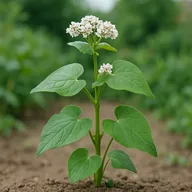
Plant wild garlic bulbs in autumn in a damp, lightly shaded spot, or sow seed after collecting it from established colonies — it's a native UK woodland perennial with broad green leaves and white star-shaped flowers in April–May, with a powerful garlic flavour to leaves, flowers, bulbs, and seed pods. Wild garlic is very hardy (RHS H6), thrives in the conditions that defeat most cultivated herbs (damp shade, leaf-mould soil), and spreads slowly by seed and bulb division to form a carpet over 5–10 years. Critical safety note: wild garlic leaves are sometimes confused with lily-of-the-valley (Convallaria majalis) which is highly toxic — always crush a leaf and confirm the garlic smell before eating. Pick leaves from March to May, flowers in April–May, both raw or cooked (pesto, butter, omelettes, soup). After flowering the plant disappears underground until next spring.
How to grow wild garlic
- 1
Identify it without doubt — the lily-of-the-valley trap
The most important rule. Wild garlic leaves can superficially resemble lily-of-the-valley (Convallaria majalis) which is highly toxic — even small quantities can cause heart issues. Safe identification test: crush a leaf between your fingers. Wild garlic smells unmistakably of garlic. Lily-of-the-valley smells of nothing or faintly sweet. Always do the crush-and-smell test before picking, even on plants you think you know. Lords-and-ladies (Arum maculatum) is another woodland look-alike — also toxic, also no garlic smell.
- 2
Plant in damp shade
Wild garlic wants the conditions of UK deciduous woodland: dappled shade under trees, moisture-retentive leaf-mould-rich soil, sheltered from wind. Avoid full sun (leaves scorch) and dry soil (poor growth). Under fruit trees, alongside a north-facing wall, or in a damp wild corner are ideal positions.
- 3
Plant bulbs in autumn
Bulbs (in the green): plant bulbs in September–October, 5 cm deep and 10 cm apart. Pot-grown plants in growth (in the green): plant in March–April when the leaves are up but before flowering — the most reliable establishment method. From seed: trickier; needs cold stratification (winter outdoors), patience (often takes 2 years to flower), and source-collected seed (it doesn't dry-store well).
- 4
Don't dig from the wild
UK Wildlife and Countryside Act 1981 makes it illegal to dig up wild plants without the landowner's permission. Even where it's legal, collecting wild bulbs damages woodland ecosystems. Buy from a specialist supplier (Crocus, Sarah Raven, Cotswold Garden Flowers) or take a small division from a friend's established patch. Foraging the leaves (not the bulbs) from public woodland is generally legal but check local bylaws.
- 5
Pick leaves March–May
Cut whole leaves at the base from when the plant emerges in March. Pick before flowering for the best flavour (April onwards in southern gardens) — leaves get tougher and slightly bitter after flowers open. Don't pick all leaves from a single plant; take a leaf or two from each clump so the colony continues photosynthesising for the bulb to bulk up.
- 6
Use the flowers and seed pods too
The white star-shaped flowers (April–May) are edible and have a milder garlic flavour — scatter on salads, butter, soups. The green seed pods that follow (May–June) are intensely garlicky — pickle them whole as wild garlic capers or finely chop into dressings. Every part of wild garlic except the roots is edible.
- 7
Let it die back undisturbed
After flowering (late May–June), wild garlic dies back completely and the bed looks bare until the following spring. Don't dig the area in summer (you'll damage the dormant bulbs) and don't worry about the disappearance — it's natural. Mulch with leaf-mould or compost in autumn to feed the next season's growth.
- 8
Make wild garlic pesto in May
The classic use. Recipe: 100 g wild garlic leaves, 50 g grated parmesan (or pecorino), 50 g toasted pine nuts (or walnuts), 100 ml extra virgin olive oil, juice of half a lemon, salt to taste. Blitz in a food processor. Keeps 1 week in the fridge or 3 months frozen in ice cube trays. Use on pasta, bruschetta, roast potatoes, fish. One large picking gives 4–6 jars for the freezer.
Common questions
The wild garlic year in your garden
How to Propagate
Hardiness Zones
USDA 5 equivalent