Kohlrabi
Kohlrabi
Brassica oleracea Gongylodes Group
📋Quick Facts
Height
0.4m
Water
💧💧 Average watering
Hardiness
Zone 2-11
About
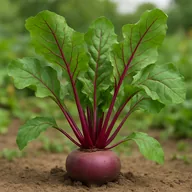
Sow kohlrabi direct from April to August, in sun in well-drained moisture-retentive soil — it's a fast-growing brassica (8–10 weeks from seed to harvest) grown for the swollen above-ground "globe" that forms at the stem base. Kohlrabi is hardy (RHS H4) and an autumn-sown crop overwinters in mild gardens for spring harvest. Azur Star (purple) and Korist (green) are popular UK varieties. Pick when the globe is tennis-ball sized (7–10 cm diameter) — larger globes get woody. The flavour is mild, sweet, faintly cabbagey — like a cross between turnip and cabbage stalk, eaten raw in salads (peeled and grated, or thinly sliced) or cooked in stir-fries and stews. A less-grown UK crop that deserves wider use — fast, easy, productive in small spaces, and the purple varieties are ornamental.
How to grow kohlrabi
- 1
Pick variety by colour
Azur Star: purple skin, white flesh, looks dramatic in the kitchen garden. Mild sweet flavour. The popular UK choice. Korist: green-skinned, slightly larger, very reliable — the green standard. Olivia: green-skinned modern variety, good bolt resistance. Superschmelz: massive heritage variety (can reach 8 kg!) — but stays tender even at large size. For the curious gardener. For a first crop: Azur Star purple — visual interest plus reliable mild flavour.
- 2
Sow direct, April to August
Spring sowings (April–June): crop in summer. Late-summer sowings (July–August): crop in autumn–winter. Direct-sow in shallow drills 1 cm deep, 30 cm between rows. Germination in 7–14 days. Kohlrabi doesn't transplant well as mature seedlings (taproot disturbance triggers premature bolting); sow direct or use modules and plant out very young.
- 3
Thin to 20–25 cm apart
Once seedlings have 3–4 leaves, thin to one plant every 20–25 cm. Don't crowd — overcrowded kohlrabi produces small globes. Use the thinnings in salads (very young leaves and small stems).
- 4
Water consistently for tender globes
The single most important husbandry rule. Kohlrabi grown in dry conditions develops tough, woody, hot-tasting globes. Water deeply once or twice a week in dry weather. Mulch with garden compost to conserve moisture. Consistent moisture is more important than total water volume — fluctuating wet/dry conditions cause splitting and woody texture.
- 5
Harvest when tennis-ball sized
Pick when the globe is 7–10 cm diameter — tennis-ball size or slightly smaller. At this size: tender, sweet, mild. Bigger than 10–12 cm: globes get woody, fibrous, and develop the hot bitter flavour of overgrown turnips. Cut with a sharp knife just below the globe — the rest of the plant can stay in the ground briefly but won't regrow (the swollen stem is the whole crop).
- 6
Use the leaves too
Kohlrabi leaves are edible — like a softer cabbage. Young leaves (from the centre of growing plants): salad or stir-fry. Older leaves (when harvesting the globe): chop and cook like spring greens, kale, or any other brassica leaf. Don't waste them — they're often as good a crop as the globe.
- 7
Watch for cabbage white and slugs
Cabbage white butterfly: caterpillars on leaves April–September. Cover with insect mesh from sowing through the cropping window. Slugs: love kohlrabi seedlings. Apply wool pellets and nematodes; protect young plants with crushed eggshells or copper rings. Pigeons: occasionally eat seedlings; mesh covers exclude them.
- 8
Sow successionally for continuous supply
A single kohlrabi sowing matures over 2–3 weeks then needs harvesting before the globes get woody. Sow a fresh row every 3 weeks from April to August for continuous supply. For winter use: an August sowing gives autumn cropping (October–November) and the plants survive mild winters; in cold gardens, harvest before December and store in a cool shed (lasts 2–3 months wrapped in newspaper).
Common questions
Pest Resilience
Cabbage white caterpillars and flea beetle are the main threats; less prone than cabbage.
Companion Planting
Visual Characteristics
Fruits
Harvest: Summer to autumn / fall
Culinary
Slaws, roasted, gratin, steamed, stir-fries, soups, stuffed
The kohlrabi year in your garden
How to Propagate
Hardiness Zones
USDA 7 equivalent