Nectarine
Nectarine
Prunus persica var. nucipersica
📋Quick Facts
Height
3.5-4.5m
Spread
3.5-4.5m
Growth
🐢 Slow
Takes time to establish
Care Level
👍 Moderate
Some experience helpful
Water
💧💧 Average watering
Hardiness
Zone 5-8
Cropping Timeline
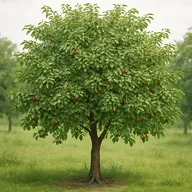
Nectarines are essentially smooth-skinned peaches and share the same rootstock and growing requirements. On semi-dwarfing rootstock like St Julien A, expect first fruit in the third year and full cropping by year five. They need a warm, sheltered spot — a south-facing wall is ideal. Like peaches, they are self-fertile and susceptible to peach leaf curl, so a rain shelter from late autumn to mid-spring makes a big difference. Nectarines are slightly less hardy than peaches, so in marginal areas a fan-trained tree under a lean-to shelter works well.
About
Smooth-skinned cousin of the peach, ideal for sunny microclimates.
Pest Resilience
Peach leaf curl is the main threat; aphids and brown rot also common.
Companion Planting
Visual Characteristics
Flowers
Blooms in Spring
Fruits
Harvest: Summer
Culinary
Fresh eating, grilling, jams, salads, drying, pickling, bellini cocktails
The nectarine year in your garden
How to Propagate
🦋Wildlife & Garden Ecology
Great for supporting local pollinators and wildlife
Hardiness Zones
USDA 7–8 equivalent