Pear
Pear
Pyrus communis
📋Quick Facts
Height
4.0-5.0m
Spread
3.0-4.0m
Growth
🚀 Fast
Grows quickly, needs regular attention
Care Level
👍 Moderate
Some experience helpful
Water
💧💧 Average watering
Every "7-10" days
Hardiness
Zone 4-8
Cropping Timeline
Pears on Quince A rootstock typically start bearing around year four, sometimes sooner on the more dwarfing Quince C. They are generally a little slower to come into cropping than apples but worth the wait. Most pears need a compatible pollination partner from the same flowering group — Conference is partly self-fertile and a good starting choice. Pears are best picked slightly under-ripe and ripened indoors; left on the tree they go "sleepy" (brown and mealy) from the inside. Cordon and espalier forms are excellent for walls and small gardens.
About
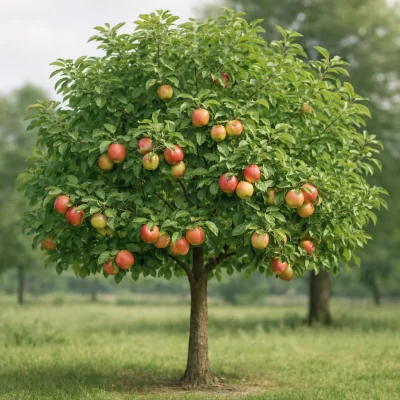
Plant pear trees bare-root from November to March, in a sheltered, sunny, frost-free spot — pears flower earlier than apples and are vulnerable to spring frosts, so position matters more than for any other fruit. Pears are very hardy (RHS H6) but the early blossom is not. The rootstock controls the eventual size: Quince C for cordons and small gardens (2–3 m), Quince A for half-standards in larger gardens (3–4 m), pear seedling rootstock for full-size trees. Most pears need a pollination partner from the same flowering group; Conference is the UK reliable choice — partially self-fertile and crops in shaded gardens where most pears struggle. Pick pears unripe and firm in September, ripen indoors over 2–3 weeks; tree-ripened pears go mealy and brown at the core. Pear leaf blister mite causes black blisters but rarely harms the crop.
How to grow pear
- 1
Pick a rootstock for your space
Quince C (most dwarfing): 2–3 m tree, suitable for cordons, espaliers, fans, and small gardens. Needs permanent staking. Quince A (semi-vigorous): 3–4 m bush tree, the standard garden pear. Pear seedling (vigorous): 5–8 m full-size tree, only for orchards and large gardens. Most garden centres sell on Quince A; specialist nurseries (Blackmoor, Bernwode, Keepers) offer the full range.
- 2
Choose Conference if you only plant one
Conference is the UK's safest pear — partially self-fertile, reliable cropper, takes light shade, stores 1–2 months, classic flavour. Crops well as a single tree (heavier with a pollination partner). Other reliable UK varieties: Doyenne du Comice (peak flavour, demanding), Williams' Bon Chretien (early, peeling pear), Beth (compact, very early). Beware: most pears are not self-fertile — you'll need 2–3 trees of different varieties in the same flowering group.
- 3
Plant in a sheltered, sunny, frost-free spot
Position matters more for pears than any other fruit. Pears flower in mid-April — 2–3 weeks earlier than apples — and the blossom is vulnerable to late frosts that wipe out the crop. South or west-facing wall positions are ideal; avoid frost pockets (low-lying spots, hollows). Spacing: 4 m for bush trees on Quince A, 2 m for cordons on Quince C, 8 m for espaliers.
- 4
Plant bare-root in winter
November to March while dormant. Soak the roots for an hour before planting. Plant at the same depth the tree was in the nursery — graft union (the bulge) should be 7–10 cm above soil. Stake permanently for Quince C rootstocks (they don't anchor well). Water in deeply.
- 5
Mulch and avoid grass at the base
A 5 cm mulch of garden compost or well-rotted manure in a 1 m circle around the trunk (keeping it 5 cm clear of the bark itself). Don't let grass grow within this circle in the first 3–5 years — grass roots compete heavily with young pears. After 5 years, lawn can grow back if you want.
- 6
Prune in winter for shape, summer for cordons
Bush trees: late winter (Feb–early Mar) — remove crossing branches, open the centre to a wine glass shape, shorten leaders by a third. Cordons, espaliers, fans: summer prune (August) — cut sideshoots back to 3 leaves above the basal cluster. Pears tolerate hard pruning if needed.
- 7
Pick at the right (early) moment
The most important pear husbandry rule. Pears do NOT ripen well on the tree — they go mealy and brown at the core. Pick when the fruit is full size, still firm, but the stalk lifts cleanly from the spur with a gentle twist (early-mid September for Williams, September for Conference, late September for Doyenne du Comice). Lay out on a tray in a cool dark place; they ripen over 2–3 weeks.
- 8
Watch for pear leaf blister mite and scab
Pear leaf blister mite: small dark blisters on leaves, looks alarming but rarely affects fruit yield — pick affected leaves off and bin (don't compost). Pear scab: brown/black corky spots on leaves and fruit — choose resistant varieties (Concorde, Beth), prune for airflow, clear fallen leaves in autumn. Codling moth can affect pears as well as apples — pheromone traps in June or grease bands.
Common questions
Pest Resilience
Pear midge, pear blister mite, and fire blight can all be problematic.
Companion Planting
Visual Characteristics
Fruits
Harvest: Autumn / fall
Culinary
Fresh eating, poaching, baking, perry, drying, preserves, salads with blue cheese
The pear year in your garden
How to Propagate
This plant produces viable seeds for propagation
🦋Wildlife & Garden Ecology
Great for supporting local pollinators and wildlife
Monitor for these pests and treat early if spotted
Hardiness Zones
USDA 5–6 equivalent